做自己,因为别人都在做自己。
– Oscar Wilde
这是我新博客的第一篇文章。我刚开始写这个新博客,因此请继续关注。在下方订阅,以便在我更新新文章时您会收到通知。
做自己,因为别人都在做自己。
– Oscar Wilde
这是我新博客的第一篇文章。我刚开始写这个新博客,因此请继续关注。在下方订阅,以便在我更新新文章时您会收到通知。
Social network analysis refers specifically to online social network analysis (Online Social Network Analysis). The development of this science was born with the advent of online social network services (SNS). We are exposed to social media every day. Through this course, we learned the importance of social network and social media analysis.
The core task of this course is to write an opinion analysis of 17 United Nations Sustainable Development Goals, and then analyze how social network analysis can help solve the 17 goals of the United Nations sustainable development. Finally, through the comments between classmates, analyze the emotions of your comments and analyze your position in the social network. Finally, we divided into 4-5 groups to complete a project. In this project, we analyze and discuss a social media research report, analyze the data collection method, the number of data collection, the data analysis method, and the final conclusions, and give a lecture.
In the first assignment, we analyzed the comments of our blog. By collecting comments, and then through the technology of NLP sentiment analysis. We will obtain positive vocabulary and negative vocabulary, then add points through positive vocabulary, and reduce points through negative vocabulary. Finally, I get a score greater than 0, proving that most of the positive comments I received are positive.
In the second assignment, we want to analyze the interaction between me and my classmates.
The final result is as follows
In-degree of my node is 7.
The out-degree of my node is 5.
The closeness centrality of the node representing me is: 0.4272013949433304.
The shortest path between nodes representing me is: 0.00745079365647456.
According to the above results, it shows that I often comment on fixed people, and I am not the center of socializing.
This course is particularly interesting, you can learn the technology of social media, you can also learn the technology of programming. The most important thing is to participate in the whole process of data production, data collection and data analysis, and have a comprehensive understanding of social network analysis.
In the new era of the development of the Internet, the rapid development of social media has generated a large amount of user data. These data components reflect users’ behavior activities, thoughts and emotions. Therefore, the rich online data in online social media provides unprecedented opportunities for user behavior research Because emotions are a vital factor in understanding and predicting user behavior.

The most common application of sentiment analysis is to analyze consumer opinions on products and services in online reviews. Twitter and Facebook are the focus of many sentiment analysis applications, and the most common applications use Twitter and Facebook data to detect the reputation of a particular brand. At the same time, sentiment analysis can also be applied to the political field, such as tracking users ‘opinions on voters’ speeches and behaviors on social networks. In addition, in the financial market, social network sentiment analysis is also widely used. For example, sentiment analysis systems use articles collected from multiple online platforms to discuss enterprises, analyze the overall sentiment score, and apply the score to the trading system.
Emotional factors can be affected by weather, which can help us discover climate change.
Because of the severe cold weather in the United States this winter, a “hot water challenge” was set off on social networks, causing 8 people to be burned to the doctor.

When the weather is good, people are more happy on social networks

The conclusions of the study are from Card III and the Commonwealth Scientific and Industrial Research Organisation (CSIRO), the Massachusetts Institute of Technology (MIT), the Institute of Electrical and Electronics Engineers (IEEE), the University of California, San Diego, and Monash, Australia University and Stanford University jointly published in academic journal Plos One. The research team, after analyzing billions of messages on Twitter and Facebook, came to the following conclusion: People prefer sunny, hot climates to cold, wet weather. “This research is the first experiment to accurately observe and compare the weather and human mood changes in billions of comments posted on Twitter and Facebook in 75 US metropolitan areas.” Esteban Moro, a visiting scholar at the MIT Media Lab, said. Although this fact is a widely popular view, no large-scale scientific research has been conducted so far to be able to draw statistically significant conclusions. To test the relationship between climatic conditions and emotional expression, the researchers collected 2.4 billion Facebook messages and 1.1 billion Twitter messages between 2009 and 2016. Using a special tool that can identify the positive or negative emotion of each piece of information based on the content, analyze each piece of published information, and count the number of positive and negative words used to compare with the weather conditions in each area Compare.
“The weather ’s impact on emotions is so significant that it can even be as emotionally volatile as events such as the California earthquake in August 2014 or the San Bernardino shooting in December 2015, which killed more than 14 people and injured more than 20 people. Level. “Estevan Moro said.
Further increase in global temperature will significantly increase suicides in the US and Mexico

“We have been studying for decades how the impact of climate warming on violence and conflict has all proven. The frequency of war will be a bit hotter and drier on the planet,” said Soromin Xiang of the University of California, Berkeley. Increase. Now we have another piece of evidence that hot weather will affect human aspirations to end others and their lives. “
Extraordinarily hot winters or extremely cold summers, heat waves, weekly rainy days, droughts, and other phenomena-these so-called “extreme climate phenomena” are considered to be one of the consequences of global warming.
After studying the responses of tens of thousands of people in the United States and Mexico to rising and falling temperatures, and after analyzing their messages on Twitter and other social networks, Soromin Xiang and colleagues concluded that the process was Suicidal people are more affected. After studying more than 600 million messages, scientists found that people started posting more frequently on social networks about depression, loneliness, and suicidality when heat waves hit or when temperatures were usually high.
If global warming continues at the current rate, the frequency of suicides in the United States and Mexico will increase by 1.5% to 2.3% by the middle of this century, or 40,000 suicides each year. Soromin Xiang said that this is equivalent to the growth of suicides during economic crisis or major social changes.
In short, the climate can also change human social mood. We can use social network analysis to understand the impact of climate change on humans. It is also possible to discover climate change through social network analysis, so as to explore climate change more accurately, which is even more effective than other observation indicators.
Last year I watched a documentary called Our Planet, which talked about the global impact of warming.

In recent years, due to the warming of the climate, glaciers in the Arctic have been declining, and there is a shocking number in the documentary: In 20 minutes, 75 million tons of glaciers have disintegrated. No more glaciers are expected in the Arctic by 2040. This will not only intensify global warming and sea-level rise but also affect the living environment of countless animals and plants.

In the northernmost part of Russia, hundreds of thousands of walruses live on sea ice, where they are closest to where they prey. However, due to the small area of sea ice, what can be seen on the screen is that almost every inch of living space is occupied, and densely packed walruses are stomped or crushed at any time, but more terrible situations are still behind …
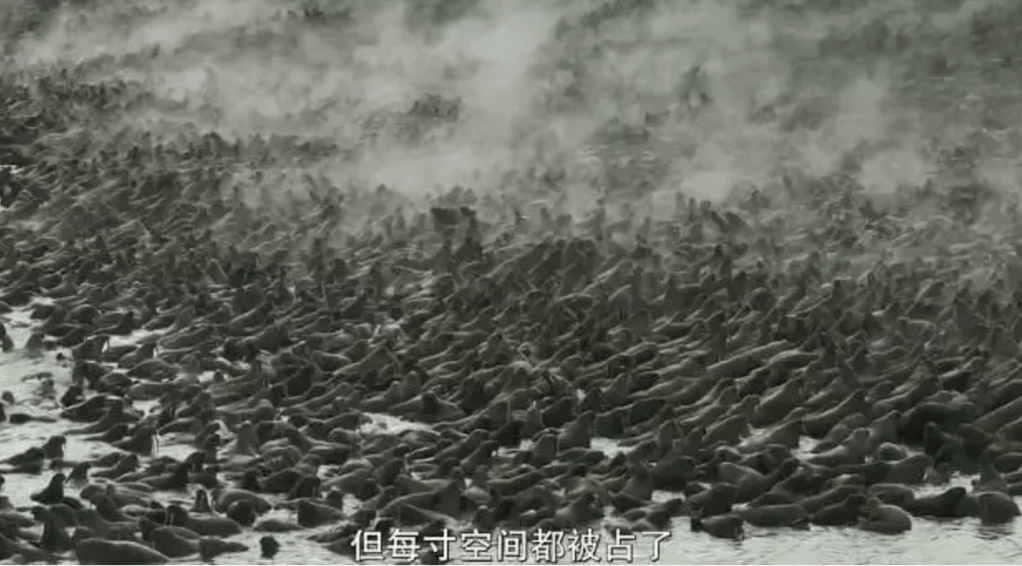
Some walruses try to find space for activities outside the group, so they climbed 80-meter-high cliffs. This is an extremely difficult task for a 1-ton walrus that is used to sea ice, but in order to survive, to breathe a fresh breath Air, they can only do so.

Hundreds of walruses set foot on the cliff, and one after another fell or rolled to the bottom of the cliff, dying and waiting for death. Why do latecomers keep going down the cliff? Do you want to starve to the cliff or let go? Do you think they have more options? In a blink of an eye, the walrus corpse on the coast was startling …
“They are all at the forefront of climate change and are bearing the consequences.” But don’t forget that it is humans that cause climate warming, aren’t humans the indirect killers of walruses? !!
Although the end of the episode tells us that the process of global warming is slowing down and the creatures on the ice can take a breather, walruses and more animals living on the ice do not know when their homeland will disappear, and it is completely Unable to control their own destiny, as a netizen commented: human faults always require animals to pay!
Every time you watch these documentaries, you will feel that you are really small. In fact, most people know the importance of protecting the environment, but do you really do something for the environment? This is our planet, shouldn’t it be guarded by us?
From the current causes of greenhouse gas generation and the scientific and technological means mastered by mankind, the main way to control climate change and its impact are to formulate an appropriate energy development strategy, gradually stabilize and reduce emissions, increase absorption, and make necessary adaptations. Climate change measures.
The main ways to control greenhouse gas emissions are to change the energy structure, control the use of fossil fuels, increase the proportion of nuclear and renewable energy; improve the efficiency of power generation and other energy conversion sectors; improve the energy use efficiency of industrial production sectors, and reduce the energy consumption per unit product. Energy consumption; improve civil energy efficiency such as building heating.
Improve the energy efficiency of the transportation sector; reduce the destruction of forest vegetation, control the emission of methane from paddy fields and landfills, and thereby control and reduce greenhouse gas emissions such as carbon dioxide.
The main ways to increase the absorption of greenhouse gases include afforestation and the use of carbon sequestration technology. Carbon sequestration technology refers to the separation and recovery of carbon dioxide in combustion gases, and then deep-sea disposal and underground disposal, or chemical, physical and biological methods to fix it. The technical principles of carbon sequestration technology are clear, but whether it can become a practical technology is unknown.
Measures to adapt to climate change are mainly the cultivation of new crop varieties, adjustment of agricultural production structure, planning and construction of projects to prevent coastal erosion, and so on.
With the rapid development of the Internet and social networks, people have more access to information, and traditional offline social activities have gradually transformed into online social interactions. More frequent social activities have generated a large amount of social information. This complicated and complicated information has exploded to different user groups along with social network activities and changed the behavior of users. The explosive growth of massive Internet users’ interactive data contains huge research value and commercial value.
Social network analysis is a technology developed in recent years to study complex networks. The phenomenon of complex networks covers a wide range. Scientific research has found that most practical systems are complex networks, from bacterial, cellular, and protein systems, to family relationships, friendships, and even cooperative relationships among scientific researchers. The citation relationships between papers, large online social networks, web page hyperlinks, etc., all constitute some kind of complex network system. Social network analysis can not only analyze the characteristics of the network as a whole, but also deeply analyze the implicit associations inside the network, and discover the knowledge that humans cannot intuitively discover. Social network analysis aims at how to effectively extract the valuable information in the social network topology and how to efficiently and concisely represent these network structure information.
An online social network is a social structure composed of a collection of social individuals and connections between individuals on an information network. It includes three elements: relationship structure, network group, and network information. Among them, the relationship structure of social networks is a network system formed by individual members of society through social relationships. Individuals are also called nodes, which can be entities or virtual individuals with different meanings, such as organizations, individuals, and network IDs. The interrelationships between individuals can be multiple relationships such as relatives and friends, action behaviors, and sending and receiving messages. Among them, the virtual community in a given social network is a subset of the social network, and the nodes in the virtual community are closely related, and the nodes in different virtual communities are sparsely associated. Network social group behavior refers to behaviors in which a network individual aggregates or concentrates on a certain event in a virtual space, interacts, functions, and similarly relies on each other. Information dissemination based on social networks refers to the information transfer between individuals and individuals, between individuals and groups, and between groups in social networks. This transfer can be iterative. Therefore, social network analysis mainly includes three aspects of research objects: (1) the structural characteristics of social networks themselves; (2) groups and their behaviors in social networks; and (3) information and their dissemination in social networks.
The “relationship structure” in social networks provides a low-level platform for the interaction of network groups and is the carrier of social networks; the “network group” directly promotes the spread of network information and in turn affects the relationship structure and is the main body of social networks;
“Network information” and its dissemination are the starting point and destination of social networks, as well as the incentives and effects of group behavior. They also affect the changes in relationship structure and are the objects of social networks. The relationship between the above three can be summarized into three types of problems.
(1) Structural characteristics and evolution mechanism of online social networks. How should the structure of a social network be represented? What kind of representation can both reflect the nature of the social network and support calculation and analysis? What kind of calculation method can accurately describe the evolution of the structure of the social network?
(2) The formation and interaction of group behaviors in online social networks. How to characterize the existence and formation of groups in social networks? How to express and measure the interaction between groups? How should the interaction between groups affect the evolution of groups?
(3) Information dissemination and evolution mechanism of online social networks. How can the connotation of information be expressed in a computable form? What is the calculation method of the spread process and situation of information on social networks? How to use the calculation method to characterize the interaction between information connotation and information dissemination?
这是一篇示例文章,最初作为 Blogging University 的组成部分发布。报名参加我们十个项目中的其中一个,立即开始撰写您的博客。
您今天要发布一篇文章。不必担心您的博客的外观。如果您还没有给博客命名或是感到不知所措,也不必担心。只需点击“新文章”按钮,告诉我们您来此处的原因。
为什么要这样做?
文章可短可长,可以是对您的生活的个性化介绍或是博客宗旨说明,也可以是对未来的宣言或是对希望发布的内容类型的简要概述。
为了帮助您开始撰写,不妨思考以下几个问题:
您并非一定要受此限制,博客的一个奇妙之处在于,随着我们学习、成长和与他人互动,它们是会不断演变的,不过如果知道从何处入手以及为何开始,这将会颇有益处,并且明确您的目标可能会激发您写其他一些文章的灵感。
不知道如何开始?只需写下您脑海中闪现的第一件事即可。Anne Lamott 是一位作家,大家都喜欢她写的书。她指出,你要允许自己写出“蹩脚的初稿”。Anne 提出了一个很好的观点,先开始写,之后再去考虑如何编辑。
在您准备发布时,给您的文章贴上三到五个标签来描述您博客的关注点 – 写作、摄影、小说、育儿、美食、汽车、电影、体育等。这些标签将帮助关注您话题的人在阅读器中找到您。确保添加“zerotohero”标签,这样其他新博主也可以找到您。

 shenshen